
Category


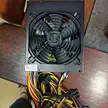

New High Quality Computer 2000W PSU Power Supply
- Place of Origin:China
- Brand Name:DJS
- Model Number:DJS 2000w power
- Connection:Desktop
- Application:Desktop, Server
- Interface Type:24pin
- Type:power supply psu 2000w
- Rating Power:>1000W
- Output Voltage:12V
- Output Current:3A
- Material:Aluminum case
- Sea view room chassis
In the complex architecture of a computer system, the power supply unit (PSU) often operates as an unsung hero—quietly converting electrical energy into a form usable by hardware components while ensuring consistent performance and longevity. Unlike CPUs or GPUs that grab attention with their performance metrics, the PSU’s value lies in its reliability: a subpar PSU can compromise even the most high-end components, causing crashes, data loss, or permanent damage. From compact mini-ITX builds to beastly gaming rigs and professional workstations, the PSU’s design, efficiency, and power delivery capabilities directly impact a system’s stability, energy consumption, and lifespan. This article explores the core features and vital advantages of computer power supplies, highlighting why they are a critical investment for any computing setup.
A fundamental feature of any PSU is its power output specification, measured in watts (W), which dictates the maximum amount of power it can deliver to system components. This specification is not just a single number but a reflection of the PSU’s ability to support specific hardware configurations. Entry-level systems with basic CPUs and integrated graphics may only require a 300–400W PSU, while mid-range gaming systems with a dedicated GPU typically need 550–750W. High-end setups—such as those with top-tier CPUs (Intel Core i9 or AMD Ryzen 9) and dual GPUs—demand 850W or higher to handle peak power draws. Critical to this specification is the +12V rail, which supplies power to the CPU and GPU (the most power-hungry components). Modern PSUs feature single or multiple +12V rails: single-rail designs deliver maximum power to a single component when needed, while multi-rail designs distribute power across separate circuits for enhanced safety. For example, a 750W PSU with a single +12V rail rated at 62A (744W) can easily support a Ryzen 7 7800X3D and an RTX 4070 Ti, ensuring stable power during intense gaming sessions.
Energy efficiency, quantified by 80 PLUS certification, is a key feature that balances performance with cost-effectiveness and environmental responsibility. The 80 PLUS standard rates PSUs based on their efficiency at converting AC power from the wall to DC power for components—higher efficiency means less energy is wasted as heat. Certifications range from basic 80 PLUS (80% efficient at 20%, 50%, and 100% load) to premium 80 PLUS Titanium (94% efficient at 50% load). For example, an 80 PLUS Gold PSU operating at 50% load converts 90% of AC power to DC, while a non-certified PSU might only convert 75%. This difference translates to significant savings: a 500W 80 PLUS Gold PSU used 8 hours daily costs roughly $20 less annually in electricity than a non-certified equivalent. Beyond cost savings, higher efficiency reduces heat generation, lowering cooling requirements and extending the PSU’s lifespan. For environmentally conscious users or data centers with dozens of systems, 80 PLUS Platinum or Titanium PSUs offer even greater energy savings and reduced carbon footprints.
Reliable power delivery is an indispensable advantage of high-quality PSUs, ensured by stable voltage regulation and low ripple noise. Voltage regulation refers to the PSU’s ability to maintain consistent voltage levels (e.g., +12V, +5V, +3.3V) regardless of load fluctuations. Poor regulation—common in cheap PSUs—can cause voltage spikes or drops that damage sensitive components like CPUs and SSDs. High-end PSUs use advanced voltage regulation modules (VRMs) to keep voltage deviation within ±3% (a industry standard for stability). Ripple noise, small electrical fluctuations in the DC output, is another critical factor: excessive ripple can interfere with component performance, causing system crashes or data corruption. Premium PSUs employ multiple filtering stages (including capacitors and inductors) to minimize ripple, ensuring clean power delivery. For example, Corsair’s HX1000i PSU maintains voltage regulation within ±1% and ripple noise below 10mV across all rails—far below the industry threshold of 50mV for the +12V rail—making it ideal for overclocked systems that demand precise power.
Build quality and component durability are defining features that separate premium PSUs from budget alternatives. High-quality PSUs use Japanese capacitors (e.g., from Nichicon or Rubycon) instead of cheaper electrolytic capacitors. Japanese capacitors have a longer lifespan (up to 100,000 hours at 105°C vs. 50,000 hours for standard capacitors) and better tolerance to heat and voltage fluctuations—critical for PSUs that operate continuously. Other durable components include solid-state capacitors (for improved reliability in high-temperature environments) and high-grade transformers (for efficient power conversion). Many premium PSUs also feature protective circuits that guard against common hazards: over-voltage protection (OVP) shuts down the PSU if voltage exceeds safe levels, short-circuit protection (SCP) prevents damage from component shorts, and over-temperature protection (OTP) activates if the PSU overheats. These features not only protect the PSU but also shield expensive components like GPUs and CPUs from catastrophic failure. For example, Seasonic’s Prime TX-1000 PSU includes 10+ protective circuits and uses 100% Japanese capacitors, backed by a 10-year warranty—testament to its build quality.
Cooling efficiency and noise levels are user-centric features that enhance the computing experience, especially for home users and gamers. PSUs generate heat during operation, so effective cooling is essential to maintain performance and longevity. Most PSUs use 120mm or 140mm fans with variable speed controls: the fan runs slowly (or stops entirely) at low loads to reduce noise and speeds up only when heat increases. For example, the EVGA SuperNOVA 850 GT uses a 135mm fan that stops spinning when the PSU is under 40% load, making it nearly silent during web browsing or video streaming. Some high-end PSUs also feature zero-fan modes for completely silent operation at idle, a boon for media centers or home offices where noise is a concern. In contrast, cheap PSUs often use small, low-quality fans that run at full speed constantly, producing annoying hums or whines. Effective cooling not only reduces noise but also extends component life: cooler operating temperatures slow capacitor degradation and prevent overheating-related shutdowns.
 DP to VGA adapters Switcher 2 ports two in and one out VGA computer screen cutter USB hotkey automatic switching sharerDP to VGA adaptersSend Inquiry
 HDMI to VGA adapter Switcher 2 ports two in and one out VGA computer screen cutter USB hotkey automatic switching sharerHDMI to VGA adapterSend Inquiry
 Mini DP to HDMI adapterMini DP to HDMI adapterSend Inquiry
 PCI-E Video Capture 4K card externalPCI-E Video Capture 4K card externalSend Inquiry
Send Message