
Category


GTX 1660s 6gb gaming pc gpu 6gb graphic card video card
GTX 1660s
minimum order:
1 piece
Quantity:
- Application:Desktop
- Item Condition:PCI Express 2.0 X16
- Video Memory Speed:4NS
- Outputs:HDMI
- Cooler Type:Fan
- Chip Process:14 nanometers
- Products Status:New, Stock
- Chipset Manufacturer:nVIDIA
- Interface Type:PCI EXPRESS
- Video Memory Type:GDDR5
- Memory Interface:128 Bit
- Output Interface Type:DVI, HDMI, HD&DP
- Brand Name:OEM
- Place of Origin:Guangdong, China
- Chipset:GTX 1660s
- Core frequency:1341/1455MHz
- Type:DDR5
- Capacity:6GB
- Hash:15M H/s/PCS
- Power Consumption:75W
- Keywords:graphics card
- Certification:ce
- card graphic
- In the realm of modern gaming and digital content creation, the graphics processing unit (GPU), commonly known as a gaming graphics card, stands as a cornerstone component that defines the quality of visual experiences. Unlike the central processing unit (CPU), which handles general computing tasks, gaming graphics cards are specialized to render complex 3D environments, process high-resolution textures, and deliver smooth, real-time visuals—essential for everything from AAA video games to professional 3D modeling. Over the past decade, advancements in GPU technology have transformed gaming from pixelated 2D worlds to photorealistic 3D landscapes, while expanding the card’s utility beyond gaming into fields like artificial intelligence (AI) and content creation. This article explores the core features and wide-ranging advantages of gaming graphics cards, highlighting their role in elevating both entertainment and professional workflows.A fundamental feature of gaming graphics cards is their parallel processing architecture, which sets them apart from general-purpose processors. CPUs are designed with a small number of powerful cores optimized for sequential tasks, but gaming and 3D rendering require handling thousands of small, simultaneous calculations—such as rendering individual pixels, simulating lighting effects, or processing vertex data. Gaming GPUs address this need with hundreds or thousands of smaller, specialized cores (known as CUDA cores in NVIDIA GPUs or Stream Processors in AMD GPUs) that operate in parallel. For example, a mid-range gaming GPU like the NVIDIA GeForce RTX 4060 Ti boasts 4352 CUDA cores, while AMD’s Radeon RX 7600 features 2304 Stream Processors. This parallel design allows GPUs to process massive amounts of visual data in real time: when rendering a game scene with dynamic lighting, multiple cores work simultaneously to calculate how light interacts with each object, texture, and surface, resulting in smooth, lifelike visuals that would be impossible for a CPU to replicate efficiently.Another key feature is dedicated high-speed memory, known as video random access memory (VRAM), which is critical for handling large, high-resolution assets. Modern games feature increasingly detailed textures, 4K or 8K resolutions, and complex 3D models—all of which require substantial memory to store and access quickly. Unlike system RAM, which is shared with the CPU and other components, VRAM is directly integrated into the GPU and optimized for high-bandwidth data transfer. For instance, high-end gaming GPUs like the NVIDIA RTX 4090 come with 24GB of GDDR6X VRAM, while the AMD Radeon RX 7900 XTX offers 24GB of GDDR6 VRAM. This dedicated memory allows the GPU to quickly access textures, shaders, and frame data without competing with other system tasks. A lack of sufficient VRAM can lead to performance issues like texture pop-in (where low-resolution textures load temporarily before high-resolution ones), frame drops, or even crashes—making VRAM capacity a key consideration for gamers seeking to play at high resolutions or with advanced visual settings.The ability to deliver high frame rates and resolutions is one of the most significant advantages of gaming graphics cards, directly impacting the gaming experience. Frame rate (measured in frames per second, FPS) determines how smooth a game feels: higher frame rates result in more fluid motion, which is crucial for fast-paced games like first-person shooters (FPS) or racing games. Most gamers aim for a minimum of 60 FPS for smooth gameplay, while competitive gamers often target 144 FPS or higher to gain a competitive edge. Gaming GPUs achieve this by combining their parallel processing architecture with advanced rendering technologies. For example, NVIDIA’s DLSS (Deep Learning Super Sampling) and AMD’s FSR (FidelityFX Super Resolution) use AI and upscaling algorithms to boost frame rates without sacrificing visual quality. DLSS, for instance, uses a trained neural network to upscale lower-resolution images to 4K or 8K, delivering up to a 2x performance boost while maintaining sharpness. This technology allows gamers to play at high resolutions with advanced effects like ray tracing (which simulates realistic lighting) without compromising on frame rate.Advanced rendering technologies like ray tracing and real-time lighting are transforming gaming visuals, and gaming graphics cards are at the forefront of this innovation. Ray tracing is a rendering technique that simulates the path of light rays as they bounce off objects, creating realistic reflections, shadows, and global illumination—effects that were once only possible in pre-rendered movies. Modern gaming GPUs, such as NVIDIA’s RTX series and AMD’s RDNA 3-based RX 7000 series, feature dedicated hardware (RT Cores in NVIDIA, Ray Accelerators in AMD) to handle ray tracing calculations efficiently. For example, the RTX 4080’s 96 RT Cores can process complex ray tracing effects in real time, rendering reflections in puddles that mirror nearby objects or shadows that change dynamically as a character moves. This level of visual realism immerses gamers deeper into the game world, making experiences more engaging and lifelike. A 2023 survey by Newzoo found that 68% of PC gamers consider ray tracing a “must-have” feature when purchasing a new GPU, highlighting its growing importance in the gaming industry.Beyond gaming, gaming graphics cards offer significant advantages in content creation and professional workflows, making them versatile tools for creators. Tasks like video editing, 3D modeling, animation, and graphic design require intensive visual processing—something gaming GPUs excel at due to their parallel architecture and dedicated VRAM. For example, video editors using software like Adobe Premiere Pro or DaVinci Resolve can leverage GPU acceleration to render 4K or 8K footage up to 10x faster than with a CPU alone. 3D artists using Blender or Maya benefit from real-time previews of their models, as the GPU renders changes instantly. Additionally, gaming GPUs are increasingly used in AI and machine learning (ML) applications: their parallel cores are ideal for training small to medium AI models, and tools like TensorFlow and PyTorch support GPU acceleration. Content creators who also game can thus invest in a single GPU to meet both their professional and entertainment needs, reducing overall hardware costs.
Recommend Products
 visual experience of games, design and other scenes, but also plays a core role in professional fields such as artificial intelligenceP00000019Send Inquiry
 GTX1030 2GB s a key component of the computer responsible for graphics output and parallel computing.P00000020Send Inquiry
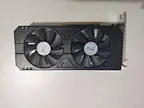 s a key component of the computer responsible for graphics output and parallel computing2060 6GB Graphic cardSend Inquiry
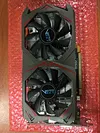 Dual-fan gaming graphics card AI drawing light-tracing desktop deep learning design desktop graphics card graphics cardP00000028Send Inquiry
Send Message