
Category


The core advantages of desktop computers are full performance release, strong scalability and high cost performance
P00000025
Quantity:
- Specification Code:DJS-Desktop case
- Specification Description:CASE 300*175*350MM Complete set of desktop computers
- The Business Chassis: A Practical Choice for Professional Computing
In the realm of business computing, every component plays a critical role in ensuring reliability, efficiency, and security—even the often-overlooked computer chassis. Unlike consumer-focused chassis that prioritize flashy aesthetics like RGB lighting or side-transparent panels, business chassis are engineered with functionality, durability, and practicality at their core. For many professional environments, a non-side-transparent design isn’t just a preference; it’s a strategic choice that aligns with the unique needs of businesses, from small offices to large enterprises.
First and foremost, non-side-transparent business chassis excel at prioritizing security and reducing distractions. In office settings, where multiple employees work in shared spaces, a transparent side panel could expose internal components to unintended viewing—or even tampering. While consumer builds may use transparent panels to showcase high-end GPUs or custom cooling systems, business PCs rarely require such visual flair. Instead, they need to keep internal hardware secure and out of sight, minimizing the risk of accidental damage (such as spills or dust buildup from curious hands) or intentional interference. Additionally, non-transparent panels eliminate the distraction of glowing components, helping employees stay focused on their tasks rather than the aesthetics of their workstations. This focus on functionality over flair ensures that the chassis serves as a quiet, unobtrusive foundation for daily business operations.
Durability and dust resistance are another key advantage of non-side-transparent business chassis. Most models in this category use robust, thick steel or reinforced plastic panels that offer better protection against physical impacts than the thin acrylic often used for transparent sides. In high-traffic office environments—where PCs might be moved during rearrangements or bumped by equipment—this sturdiness prevents dents, scratches, or cracks that could compromise the chassis’s structural integrity. Moreover, non-transparent panels typically feature tighter seals and improved air-filtering systems. Transparent acrylic panels, by contrast, often have gaps or less secure edges that allow dust to seep into the case, clogging fans and heatsinks over time. For businesses that rely on PCs to run 8+ hours a day, reducing dust buildup means fewer maintenance visits, longer component lifespans, and less downtime—all of which translate to cost savings and improved productivity.
Thermal efficiency and noise control are also strengths of non-side-transparent business chassis. Many users assume transparent panels enhance cooling by allowing heat to escape, but in reality, business-focused designs optimize airflow through strategic vent placement (e.g., front intake vents, rear exhaust fans, and top vents for hot air dispersion) rather than relying on open or transparent sides. Non-transparent panels often work in tandem with these airflow systems to direct cool air precisely to components that generate the most heat, such as CPUs and hard drives, while containing and expelling hot air efficiently. Additionally, the dense materials used for non-transparent panels act as natural sound dampeners. Unlike acrylic, which amplifies fan noise and vibrations, steel or reinforced plastic panels muffle the hum of cooling systems—creating a quieter work environment. For offices where multiple PCs operate side-by-side, this reduction in ambient noise contributes to a more comfortable and less stressful workspace.
Finally, non-side-transparent business chassis align with the professional aesthetic and scalability needs of modern businesses. These chassis typically feature a sleek, understated design—often in neutral colors like black, gray, or white—that blends seamlessly with office decor, avoiding the bold or flashy look of consumer cases. This professionalism is especially important for client-facing areas, such as reception desks or meeting rooms, where equipment should complement rather than distract from the business’s brand image. Furthermore, business chassis are designed for scalability: they often include extra drive bays (for additional hard drives or SSDs), tool-less component installation, and space for expansion cards (e.g., network adapters or security keys). These features make it easy for IT teams to upgrade or repair PCs as business needs grow—without sacrificing the chassis’s structural integrity or security.
In conclusion, the non-side-transparent business chassis is a testament to the adage “form follows function.” It may lack the visual appeal of consumer-focused designs, but it delivers exactly what businesses need: security, durability, thermal efficiency, and scalability. For organizations that prioritize reliability and productivity over aesthetics, this type of chassis isn’t just a component—it’s an investment in the smooth, uninterrupted operation of their daily workflows. Whether used in a small startup or a large corporation, the business chassis proves that sometimes, the most effective tools are the ones designed to work quietly and dependably behind the scenes.
Recommend Products
 Desktop computers have full performance, strong scalability and high cost-effectiveness to adapt to diverse scenarios.Min. Order:10 .Performance Unleashed: Hardware Performance Without Compromise The hardware of desktop computers is not limited by size and power consumption, and can give full play to its performance, which is difficult to match with notebook computers. More efficient heat dissipation: The internal space of the chassis is large, and multiple fans, water-cooling radiators and other equipment can be installed, which can quickly take away the heat generated by core components such as CPUs and graphics cards. 2. Scalability: Flexible upgrades to adapt to long-term needs Most desktop hardware is modular in design, and users can upgrade or replace parts at any time according to needs, resulting in a longer life cycle. 3. Cost-effectiveness: better configuration under the same budget Within the same price range, desktops can provide stronger hardware configurations than notebooks, and have lower maintenance costs. Lower hardware costs: Desktop hardware does not need to be lightweight designed for portability, and the manufacturing cost is relatively low. You can buy higher-specification CPUs, graphics cards, and larger-capacity memory and hard drives with the same budget. Low maintenance and replacement costs: When a single piece of hardware (such as a power supply or fan) is damaged, only the corresponding parts need to be replaced without repair or replacement of the entire machine, resulting in lower long-term use costs. 4. Usage experience: adaptable to diverse scenarios The design of the desktop computer is more suitable for use in fixed scenarios and can provide a more comfortable and flexible use experience. More freedom in screen selection: it can be paired with monitors of different sizes, resolutions (such as 4K), and refresh rates (such as 144Hz, 240Hz) to meet the screen needs of different scenarios such as office, gaming, and design. Flexible peripheral matching: You can freely choose peripherals such as mechanical keyboards, ergonomic mice, professional speakDJS-C020 desktopSend Inquiry
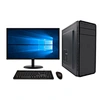 Desktop computer host commercial office independent display design rendering subsidy home game computer complete machineDJS-C021 desktopSend Inquiry
 The core advantages of desktop computers are full performance releasePSU1000WSend Inquiry
 The core advantages of desktop computers are full performance releaseP00000082Send Inquiry
Send Message