
Category
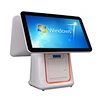
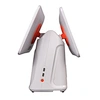
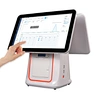
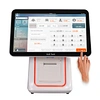
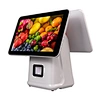
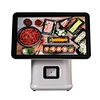
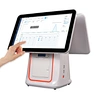
currency Touch screen dual screening stand tablet pos machine windows system terminal supermarket pos pc
DJS-PP156DD04
minimum order:
1 piece
Quantity:
- Place of Origin:China supermarket cash register
- Brand Name:DJS Tech
- After-sales Service Provided:Video technical support, Free spare parts, Field installation, commissioning and training
- Warranty:1 Year
- Operation System:win 10
- CPU:J1900
- Touch Screen Type:Capacitive Screen
- Form Factor:Form Factor
- Processor:J1900
- RAM:DDR 3 4G
- Touch Panel:Single Point Touch
- Panel:15.6"
- SSD:128GB
- Bluetooth:Buletooth4.X
- OS:Win7&8&10
- colour:White/black
- Graphics:Intel HD Graphics
- pos pc
- POS cash registers excel in efficiency and integration. They enable fast checkout to reduce queues, supporting multiple payment methods like cash, cards, and mobile payments.
With real-time inventory tracking, they sync sales data automatically, aiding accurate restocking. They record transaction details and generate reports, providing data for business decisions.
User-friendly and adaptable to retail, catering, etc., they allow barcode scanning and discount settings. Some portable models suit on-site payments. Compatible with membership systems, they boost customer loyalty while cutting operational costs and enhancing overall business efficiency.
In the dynamic landscape of modern commerce, Point of Sale (POS) cash registers have evolved from simple transaction tools into comprehensive operational hubs that drive efficiency, accuracy, and business growth. Unlike the mechanical cash registers of the past, today’s POS systems integrate advanced technology to meet the diverse needs of retailers, restaurants, hospitality providers, and small businesses across industries. Their unique features and inherent advantages make them indispensable assets, transforming how businesses process payments, manage inventory, engage customers, and make strategic decisions. This article explores the core features and far-reaching advantages of POS cash registers, highlighting their role in streamlining operations and enhancing competitiveness.
A defining feature of modern POS cash registers is their multi-functional integration, which eliminates the need for separate systems for payment processing, inventory management, and sales tracking. Traditional cash registers only recorded transactions and stored cash, requiring manual effort to reconcile sales with inventory or generate reports. In contrast, modern POS systems combine payment processing with real-time inventory tracking, customer relationship management (CRM), and sales analytics in a single platform. For example, when a retail clerk scans a product to process a sale, the POS system automatically deducts the item from the inventory database, updates stock levels, and logs the transaction details—all in a matter of seconds. This integration not only saves time but also eliminates the errors associated with manual data entry, such as miscounted inventory or misplaced transaction records. Additionally, many POS systems offer add-on modules, such as employee management (to track shifts and commissions) or appointment scheduling (for salons or clinics), making them adaptable to specific business models.
Another key feature is versatile payment processing, which caters to the diverse payment preferences of today’s consumers. As digital payments have become mainstream, businesses can no longer rely solely on cash or card payments. Modern POS cash registers support a wide range of payment methods, including credit and debit cards (via chip, swipe, or contactless), mobile wallets (such as Apple Pay, Google Pay, and Samsung Pay), digital wallets, and even emerging options like cryptocurrency in some cases. This versatility is critical for improving customer satisfaction: a 2023 survey by the National Retail Federation found that 78% of consumers prioritize businesses that offer their preferred payment method, and 40% have abandoned a purchase due to limited payment options. For businesses, accepting multiple payment methods also expands their customer base—for instance, contactless payments appeal to tech-savvy younger consumers, while mobile wallet integration caters to those seeking convenience. Moreover, POS systems ensure secure payment processing by complying with industry standards like PCI DSS (Payment Card Industry Data Security Standard), encrypting sensitive customer data to prevent fraud and protect business reputation.
Efficiency enhancement is one of the most significant advantages of POS cash registers, particularly in high-volume business environments like supermarkets, fast-food restaurants, or busy retail stores. The speed of transaction processing is a standout benefit: with barcode scanners, touchscreen interfaces, and pre-programmed product databases, POS systems can process a sale in under 30 seconds—far faster than manual cash registers. This reduces checkout lines, minimizes customer wait times, and allows businesses to serve more customers during peak hours. For example, in a fast-food restaurant, a POS system with a customizable touchscreen can store frequently ordered combos, enabling staff to ring up a meal with a single tap instead of entering each item individually. In retail, self-service POS kiosks further boost efficiency by allowing customers to scan and pay for items themselves, reducing the need for additional staff during rush periods. Beyond checkout, POS systems streamline back-office tasks: automated inventory alerts notify managers when stock levels are low, eliminating the need for time-consuming manual stock checks. Similarly, automated sales reports generate daily, weekly, or monthly summaries of revenue, top-selling products, and customer spending patterns—tasks that once took hours to complete manually.
Data-driven decision-making is another major advantage enabled by POS cash registers. In today’s competitive market, businesses need actionable insights to optimize their product offerings, pricing strategies, and marketing campaigns—and POS systems are rich sources of such data. Every transaction processed through a POS system captures valuable information: which products are selling fastest, when sales peak (e.g., weekends or holiday seasons), how much customers spend on average, and which payment methods are most popular. For example, a boutique owner can use POS data to identify that floral dresses sell best in spring and adjust their inventory orders accordingly. A café manager might notice that lattes are top-sellers during morning hours and schedule more baristas to meet demand. Advanced POS systems even offer predictive analytics, using historical sales data to forecast future trends—such as predicting a surge in holiday gift sales and advising businesses to stock up on popular items. This data-driven approach reduces guesswork, minimizes waste (e.g., overstocking slow-moving products), and maximizes revenue.
Data-driven decision-making is another major advantage enabled by POS cash registers. In today’s competitive market, businesses need actionable insights to optimize their product offerings, pricing strategies, and marketing campaigns—and POS systems are rich sources of such data. Every transaction processed through a POS system captures valuable information: which products are selling fastest
Recommend Products
 POS machineP00000027Send Inquiry
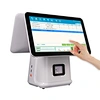 Catering ordering machine, ordering machine, commercial retail convenience store dual-screen cash register, single-screen Core i3 i5 i7,POS cash registerDJS-PN156Send Inquiry
 Catering ordering machine, ordering machine, commercial retail convenience store dual-screen cash register, single-screen Core i3 i5 i7P00000061Send Inquiry
 Catering ordering machine, ordering machine, commercial retail convenience store dual-screen cash register, single-screen Core i3 i5 i7DJS-PP156ADSend Inquiry
Send Message