
Category


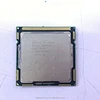


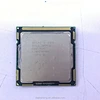
Processor CPU E7500 For LGA 775
DJS-CPU E7500
minimum order:
1 piece
Quantity:
- Type:Dual-Core CPU-E7500
- Processor Type:Intel Core
- CPU Frequency:1.0GHz
- Virtualization Technology Support:No
- Products Status:Used, Stock
- Application:Desktop
- Processor Brand:Intel
- L2 Cache:2*256KB
- Socket Type:LGA 775
- Brand Name:OEM
- Place of Origin:Guangdong, China
- Main Frequency:2.93ghz
- Warranty:1 Year
- Delivery time:2-7 Working Days
- Package:package in standard carton
- Dismantling of core functions E7500 processorInstruction execution: This is the most basic function of the CPU. It reads program instructions from the memory and processes them according to the process of"fetch-decode-execute", such as opening software, running games, calculating data, etc., which are essentially the result of the CPU executing a series of instructions.
Data processing: Undertake various computing tasks, including basic addition, subtraction, multiplication and division, complex graphics rendering, video encoding and decoding, and AI operations. Different scenarios have different requirements for processing power. For example, office work only requires basic computing, while 3A games and professional rendering require powerful multi-core processing capabilities.
Hardware coordination: As the"commander"of the hardware system, the CPU will schedule other hardware such as memory, hard disk, graphics card, etc. It allocates data reading and writing tasks to the hard disk, coordinates the graphics card to process graphics output, and ensures that all hardware works together to avoid lagging or resource waste.
Multi-task management: Through time slicing technology, the CPU can quickly switch between multiple programs, allowing users to run multiple programs such as browsers, office software, music players, etc. at the same time while still maintaining smooth operations without"stuck"situations.
Correspondence between functions and user scenarios
Daily office work (documents, web pages): Rely on the CPU's single-core performance and basic instruction execution efficiency to ensure operation response speed.
Multitasking (opening multiple software at the same time): The CPU needs to have a multi-core and multi-thread design to improve task switching and parallel processing capabilities.
Professional creation (video editing, 3D rendering): Relying on multi-core computing and high-speed data processing capabilities to shorten rendering and encoding time.Dismantling of core functions
Instruction execution: This is the most basic function of the CPU. It reads program instructions from the memory and processes them according to the process of"fetch-decode-execute", such as opening software, running games, calculating data, etc., which are essentially the result of the CPU executing a series of instructions.
Data processing: Undertake various computing tasks, including basic addition, subtraction, multiplication and division, complex graphics rendering, video encoding and decoding, and AI operations. Different scenarios have different requirements for processing power. For example, office work only requires basic computing, while 3A games and professional rendering require powerful multi-core processing capabilities.
Hardware coordination: As the"commander"of the hardware system, the CPU will schedule other hardware such as memory, hard disk, graphics card, etc. It allocates data reading and writing tasks to the hard disk, coordinates the graphics card to process graphics output, and ensures that all hardware works together to avoid lagging or resource waste.
Multi-task management: Through time slicing technology, the CPU can quickly switch between multiple programs, allowing users to run multiple programs such as browsers, office software, music players, etc. at the same time while still maintaining smooth operations without"stuck"situations.
Correspondence between functions and user scenarios
Daily office work (documents, web pages): Rely on the CPU's single-core performance and basic instruction execution efficiency to ensure operation response speed.
Multitasking (opening multiple software at the same time): The CPU needs to have a multi-core and multi-thread design to improve task switching and parallel processing capabilities.
Professional creation (video editing, 3D rendering): Relying on multi-core computing and high-speed data processing capabilities to shorten rendering and encoding time.
Recommend Products
 Intel CPU E7500 For LGA 775DJS-CPUSend Inquiry
Send Message