
Category


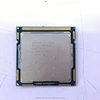


Intel CPU E7500 For LGA 775
- Type:Dual-Core
- Processor Type:Intel Core
- CPU Frequency:1.0GHz
- Products Status:Stock, Used
- Application:Desktop
- Processor Brand:Intel
- L2 Cache:2*256KB
- Socket Type:LGA 775
- Brand Name:OEM
- Place of Origin:Guangdong, China
- Main Frequency:2.93ghz
- Warranty:1 Year
- Delivery time:2-7 Working Days
- Package:package in standard carton
- E7500
- Intel CPU E7500 For LGA 775 computer E7500
For decades, Intel Central Processing Units (CPUs) have stood as a cornerstone of the global computing industry, driving innovation across personal computers, workstations, data centers, and embedded systems. As the “brain” of any computing device, a CPU’s performance, efficiency, and reliability directly shape user experiences—from casual web browsing to complex scientific simulations. Intel’s CPUs have consistently evolved to meet changing market demands, integrating cutting-edge architectures, advanced manufacturing processes, and specialized technologies that cater to diverse user segments. This article explores the core features and far-reaching advantages of Intel CPUs, highlighting their role in empowering everything from consumer laptops to enterprise-grade servers.computer CPU
A defining feature of Intel CPUs is their architectural innovation and manufacturing excellence, which form the foundation of their performance leadership. Intel has a long history of pioneering CPU architectures, from the iconic x86 design (which became the industry standard for personal computing) to modern iterations like Raptor Lake and Sapphire Rapids. Each architectural update brings refinements to core design, cache hierarchy, and instruction sets, delivering significant performance gains. For example, the 13th Gen Intel Core processors (Raptor Lake) introduced a hybrid core design—combining high-performance “Performance-cores” (P-cores) for demanding tasks and energy-efficient “Efficient-cores” (E-cores) for background processes. This hybrid architecture optimizes both speed and efficiency: P-cores handle gaming or video editing, while E-cores manage email, web tabs, and other light tasks, ensuring smooth multitasking without unnecessary power consumption. Complementing architectural advancements is Intel’s leadership in manufacturing: the company’s 10nm (rebranded as Intel 7) process technology enables denser transistor placement, reducing power usage while boosting clock speeds—critical for thin-and-light laptops that require both performance and long battery life.
Versatileperformance scaling across product tiers is a key advantage that makes Intel CPUs suitable for every computing need. Intel offers a tiered product lineup tailored to specific user segments: from entry-level Celeron and Pentium CPUs for basic computing to high-end Core i9 and Xeon processors for gaming and enterprise workloads. For casual users, a Core i3 CPU (e.g., Core i3-13100) delivers sufficient performance for web browsing, office applications, and 1080p streaming, while consuming minimal power. Gamers and content creators benefit from Core i5 and Core i7 CPUs—such as the Core i5-13600K and Core i7-13700K—which feature higher core counts, larger cache sizes, and unlocked multipliers for overclocking. For professionals working with 4K video editing, 3D rendering, or CAD software, Intel’s Xeon W processors (e.g., Xeon W-3495X) offer up to 56 cores and ECC memory support, handling multi-threaded workloads with ease. This tiered approach ensures users only pay for the performance they need, making Intel CPUs accessible to both budget-conscious consumers and enterprise buyers.
Advancedenergy efficiency and power management are critical features that enhance the usability of Intel CPUs in mobile and battery-powered devices. As laptops and 2-in-1 devices have become increasingly popular, users demand CPUs that deliver strong performance without sacrificing battery life. Intel addresses this with technologies like Intel Speed Shift, which dynamically adjusts clock speeds and voltage in milliseconds to match workload demands—slowing down during idle periods and ramping up for intensive tasks. The hybrid core design (mentioned earlier) further boosts efficiency: E-cores consume up to 60% less power than P-cores while handling light tasks, extending battery life for laptops. For example, a laptop equipped with a 13th Gen Core i5-1335U (a low-power mobile CPU) can deliver up to 12 hours of web browsing on a single charge, while still offering enough performance to edit 1080p videos. Intel’s vPro technology, available on business-focused CPUs, adds power management features for IT departments—allowing remote control of device power usage, reducing energy costs for organizations with hundreds of laptops.
Specializedintegrated technologies and accelerators differentiate Intel CPUs by enabling performance gains in specific workloads. Modern Intel CPUs integrate dedicated hardware accelerators that offload tasks from the general-purpose cores, improving efficiency and speed. For content creators, Intel Quick Sync Video—available on most Core and Xeon CPUs—uses dedicated media cores to accelerate video encoding and decoding, reducing export times for 4K footage by up to 50% compared to software-only encoding. Gamers benefit from Intel Xe Super Sampling (XeSS), an AI-powered upscaling technology that delivers 4K-like visuals at 1080p or 1440p resolutions, boosting frame rates without sacrificing quality. Data center CPUs like Intel Xeon Scalable processors include accelerators for AI, encryption, and storage: the Intel Advanced Vector Extensions 512 (AVX-512) instruction set speeds up scientific computing and machine learning workloads, while Intel QuickAssist Technology accelerates data encryption/decryption, enhancing security without slowing down servers. These specialized features make Intel CPUs more than just general-purpose processors—they act as optimized engines for specific tasks.
Robustcompatibility and ecosystem integration are longstanding advantages that have solidified Intel’s market position. Intel’s x86 architecture has been the industry standard for over four decades, ensuring compatibility with virtually all operating systems (Windows, Linux, macOS) and software applications. This compatibility is critical for businesses and users who rely on legacy software—for example, a manufacturing company using outdated CAD software can still run it on a modern Intel-based PC without compatibility issues. Intel also collaborates closely with motherboard manufacturers, software developers, and device makers to ensure seamless integration. For gamers, Intel’s partnership with GPU manufacturers (like NVIDIA and AMD) and game developers optimizes CPU-game compatibility, ensuring titles like Cyberpunk 2077 orFortnite run smoothly on Intel-based systems. In the data center, Intel Xeon CPUs integrate with leading cloud platforms (AWS, Azure, Google Cloud) and virtualization software (VMware), making them a trusted choice for enterprise IT departments. This ecosystem support reduces troubleshooting and ensures a consistent user experience across devices.
 Processor CPU E7500 For LGA 775DJS-CPU E7500Send Inquiry
Send Message